Find Silicone Reptile Soil Heating Cable for Terrariums, Soil, and Plants
Explore 12 silicone reptile soil heating cable options to compare voltage, power, and length specifications. This guide helps buyers evaluate materials and certifications for reptile terrariums, soil heating, and plant applications; compare the available evidence and request quotations based on your requirements.
Key considerations
Products List


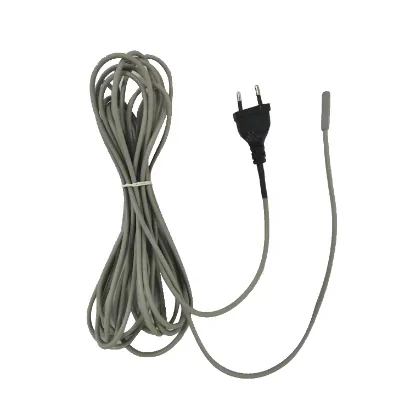


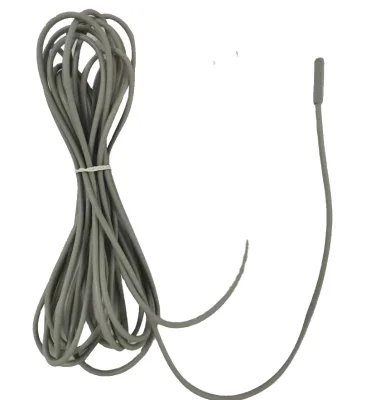
Comprehensive Sourcing Guide
Silicone Reptile Soil Heating Cable Sourcing Guide
Silicone reptile soil heating cables are flexible resistance wires insulated with silicone or comparable polymer jackets, designed to warm substrate in terrariums, planted soil beds, and similar enclosures. For B2B buyers, the category sits at the intersection of pet supplies and electrical heating components, which means sourcing decisions must balance animal-safety expectations with electrical compliance. Listings observed in this category typically originate from manufacturing hubs in Anhui and Jiangyin, China, with OEM branding widely available and customization explicitly offered across the reviewed products.
Before engaging suppliers, define your target market and use case clearly. Reptile terrarium heating, soil warming for plants, and fish tank applications all appear in the observed listings, but the required wattage per meter, cable length, and plug type differ by application. Buyers who arrive with a written specification—voltage, watts per meter, jacket material, length tolerance, and connector style—consistently obtain more accurate quotations and fewer sample-rejection cycles than those relying on generic product links.
Product Scope and Observed Listing Signals
The twelve reviewed listings cluster around heating-wire form factors with lengths offered as 4m, 6m, 8m, 10m, 12m, or cut to buyer demand. Power ratings span 6W per meter up to 40W per meter or customized output, and voltage options include 220–240V and 110–120V variants. Jacket materials listed include XLPE, FEP, and PVC, while color choices range from grey, blue, red, and black to fully customized runs. Model identifiers such as Hxdg/Htdg and HDBV appear, though most products carry OEM brand names.
Listing signals suggest a highly customizable, low-barrier category: MOQs observed range from a single unit to 500 pieces, unit prices run roughly from $0.40 to $10.58 depending on specification, and declared delivery windows of 7–10 working days appear. Function claims in the listings include anti-scald, anti-stab, flame-retardant, and heat-gathering behavior, plus "safe and energy-saving" operation. Treat these as supplier observations to be verified through documentation and samples rather than as guaranteed performance characteristics across all twelve products.
Technical Specifications to Verify
Watts per meter is the single most consequential specification, since substrate temperature in reptile or soil applications depends directly on it. Confirm whether the quoted rating applies continuously along the full cable length, and verify the maximum achievable surface temperature against the thermal tolerance of the animals or root systems involved. Also confirm jacket material suitability: XLPE, FEP, and PVC behave differently under sustained warmth and abrasion, and the listing function claims of anti-scald and flame retardance should be substantiated with material data.
Beyond the heating element, pin down the electrical and mechanical details that listings often leave vague. Verify rated voltage matches your destination market—110–120V versus 220–240V—along with plug type, since US, European, Australian, and UK plugs are all offered or customizable. Confirm minimum bend radius, cable diameter, ingress protection for humid terrarium environments, and whether an integrated thermostat or separate controller is required. Request dimensional drawings and length tolerances in writing before tooling or mass production begins.
Compliance and Safety Documentation
Observed listings reference CE, RoHS, CSA, and EAC marks, with one listing citing "CE, ISO, RoHS." Do not accept these labels at face value; request the actual certificates, including the issuing body, certificate number, validity dates, and the exact product models covered. A CE declaration on one cable configuration does not automatically extend to your customized voltage, length, or plug variant, so match documentation line by line to your purchase specification.
For products intended to sit in contact with animals, soil, or water, ask what additional safety testing the manufacturer performs beyond statutory marks—dielectric strength, insulation resistance, and burn-in or aging tests are reasonable requests even if not explicitly listed. Buyers selling into North America should clarify whether CSA or UL recognition applies to the finished cable with plug, not just components. Keep copies of all certificates in your compliance file and re-verify them when specifications change, since modified designs can invalidate previously issued documentation.
Cost Drivers and Commercial Terms
Observed unit prices span $0.40 to $10.58, a wide band that reflects differences in wattage per meter, cable length, jacket material, and order volume. The main levers on your side are cable length and wattage density: longer, higher-output cables consume more resistance wire and insulation, raising material cost roughly proportionally. Color customization and special plugs typically add modest tooling or changeover charges at low volumes, so consolidating variants into fewer SKUs can improve pricing.
Observed MOQs range from 1 piece to 500 pieces, meaning sample-friendly suppliers exist alongside volume-oriented ones. Negotiate pricing tiers against realistic volume commitments rather than aspirational ones, and confirm what is included—thermostat, clips, mounting accessories, retail packaging. Carton box packing is the observed norm, with one listing citing single-item packaging at 10×10×5 cm and 0.6 kg gross weight; use these figures to model freight costs. Clarify Incoterms, payment terms, and whether the quoted delivery time of 7–10 working days applies to stock items only or includes customized production.
Supplier Qualification and Quality Control
Given the category's low entry barriers and OEM-heavy listing base, qualify suppliers through evidence rather than storefront appearance. Confirm manufacturing versus trading status by asking for factory details consistent with the stated origins in Anhui and Jiangyin, request photos or a virtual tour of cable extrusion and testing equipment, and check how long the supplier has produced heating cable specifically. A manufacturer with in-house wire drawing or extrusion generally controls consistency better than one assembling bought-in components.
For quality control, agree on an inspection protocol before the first order: incoming material checks for jacket compound, in-line electrical testing of resistance per meter, and final sampling for continuity, insulation integrity, and plug assembly. Define an acceptable quality limit for defects and specify what happens on failure—rework, replacement, or credit. For first orders, consider third-party inspection at pre-shipment, especially for customized runs where the supplier has no existing reference production to fall back on.
Long-Term Procurement Checks
Once a supplier is qualified, protect consistency across repeat orders by freezing the specification. Record the model number, jacket material, watts per meter, voltage, plug, color, and length tolerances in a controlled document, and require the supplier to flag any material or process change—silicone compound batches and resistance wire sources are common silent substitutes that shift heating performance. Keep retained samples from each approved lot for comparison against future deliveries.
Build ongoing monitoring into the relationship. Track defect rates across shipments, re-confirm certificates annually or upon specification changes, and periodically re-test samples from production lots for resistance consistency and jacket integrity rather than relying on initial approvals. With a 2-year warranty commonly listed in this category, clarify in writing what the warranty covers—full replacement, repair, or credit—and how field failures are evidenced. Buyers who maintain disciplined documentation and periodic re-verification are far less exposed to slow specification drift in this customizable, low-MOQ market.
FAQs
What voltage options are available for silicone reptile soil heating cables?
Silicone reptile soil heating cables are available in 110V and 220V configurations to suit different regional power standards. Buyers should verify their local voltage requirements before ordering to ensure safe operation. The product specifications list both 110/220V and 220-240V/110V-120V ranges, allowing for flexible integration into various terrarium setups.
What power ratings can I choose for silicone reptile soil heating cables?
Power ratings for these cables range from 6W to 40W per meter, with specific options including 6W, 10W, 13W, 17W, 20W, 30W, and 40W. Selecting the correct wattage depends on the size of the enclosure and the thermal needs of the reptile. Higher wattages provide more heat for larger areas or colder environments.
What certifications do silicone reptile soil heating cables typically hold?
These heating cables commonly hold CE, RoHS, Eac, and CSA certifications, ensuring compliance with international safety and environmental standards. Some listings also mention ISO RoHS compliance. Verifying these certifications is crucial for buyers who need to meet regulatory requirements in their target markets or for commercial distribution purposes.
Can silicone reptile soil heating cables be customized in length and color?
Yes, customization is available for both length and color. Lengths can be tailored to specific demands, with standard options including 4m, 6m, 8m, 10m, and 12m. Colors such as grey, brown, blue, red, and black are available, or custom colors can be requested. This flexibility allows buyers to match the cable to their specific terrarium design.
What is the typical lead time for silicone reptile soil heating cable orders?
The typical delivery time for these products is 7 to 10 working days. This lead time applies to standard orders and may vary depending on customization requirements or order volume. Buyers should confirm specific timelines with the supplier, especially if requesting custom lengths, colors, or packaging, to ensure timely receipt of goods.
What materials are used in the jacket of silicone reptile soil heating cables?
The jacket material for these cables is typically XLPE, FEP, or PVC, providing durability and safety. The core material is often plastic, designed to be anti-scald, anti-stab, and flame retardant. These material choices ensure the cable remains safe for reptiles and resistant to damage from soil or accidental contact within the terrarium.
What is the minimum order quantity for silicone reptile soil heating cables?
The minimum order quantity varies by supplier, with observed ranges from 1 to 500 pieces. Some specific listings indicate an MOQ of 500 pieces, while others may accept smaller quantities for sampling or initial orders. Buyers should check the specific supplier's MOQ policy to determine if their order volume meets the requirement.